


|
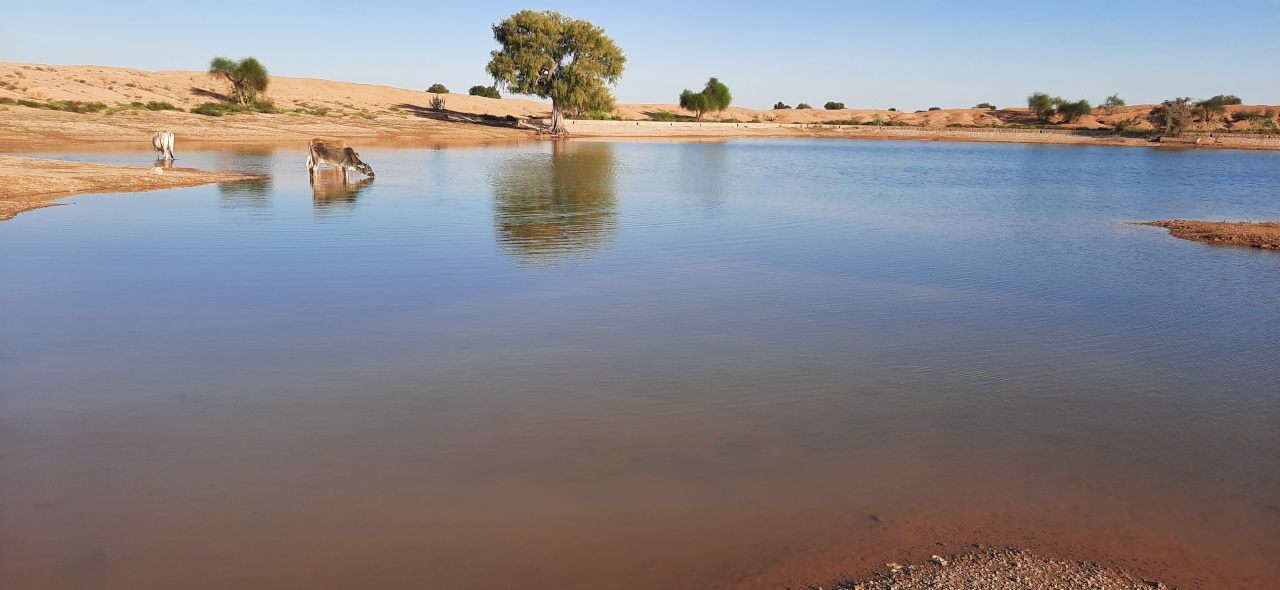
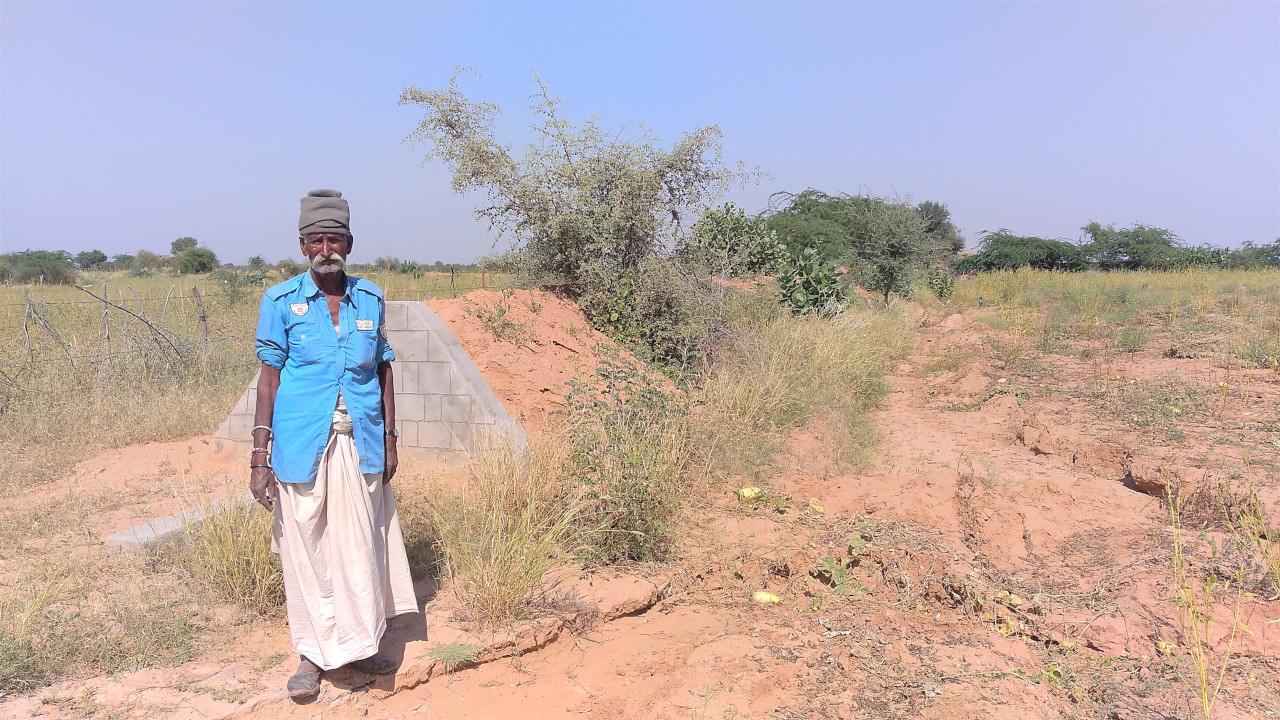
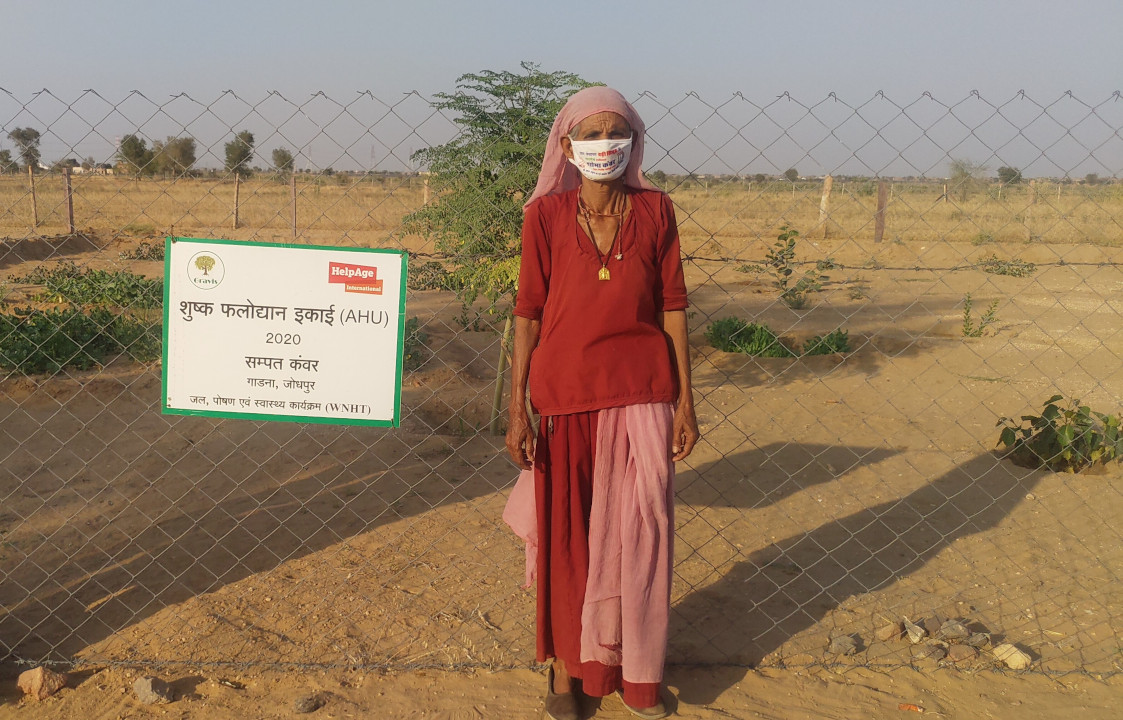
Despite the dry climate and meager rainfall, farmers in the Thar Desert region have been managing to grow crops for hundreds of years. Farmers have typically raised a variety of crops including bajra (pearl millet), moong (green gram), moth (moth bean), guar (cluster bean) and til (sesame), supplemented by livestock development. These crops are often grown together in a mixture to cover the uncertainty in distribution of rainfall. Over 65% of the land is cultivated and agriculture is the primary occupation for over 82% of the population in rural areas. With the introduction of commercial seeds, chemical fertilizers and pesticides, and irrigation techniques, land that was once fertile is loosing its fertility and crop yields began to fall. The delicate balance that was kept between harvested crops and livestock output is disturbed. GRAVIS works with communities in the most arid areas of the Thar Desert to revive traditional and sustainable techniques for achieving food security. GRAVIS also actively researches and develops innovations in sustainable desert agriculture in order to disseminate only the most useful and highly sustainable farming techniques to the local farmers. Through these activities, GRAVIS contributes to the long term welfare of the desert environment, stabilizing future crops and bringing food security and increased income to the villages. Khadin (earthen bund) construction The khadin was originally developed a few hundred years ago by the Paliwal Brahmins in Jaisalmer. The traditional khadins were larger in size, but those constructed by GRAVIS tend to be 1 to 2 meters high and 250 to 800 meters in length and are owned by a group of 2-3 families. The khadin supports abundant crops and along with trees, especially along its retaining walls, that provide the families with fodder and wood for cooking. GRAVIS has constructed a total of 3,136 khadins in its work area till date. Fruit and Vegetable Propagation Food security is only a reality if the community is able to not only sustainably produce an adequate amount of food, but also an adequate level of nutrient-rich foods like fruits and vegetables. For most of the poor in the desert, the only fruits and vegetables available are wild greens and fruits gathered when the rains have been good. Mal-nutrition is endemic, especially in women and children. GRAVIS addresses this problem by assisting families to develop fruit orchards and encourages families to plant vegetable gardens. Beneficiaries are given a variety of fruit trees including: goonda (a citrus fruit), anwala (a citrus fruit), anaar (pomegranate), nimbu (lemon) and ber (desert plum), and are trained by GRAVIS on planting and care of the plants. The fruit trees are planted near the family's home so that women and children can easily tend and give domestic wastewater to the plants. To date, GRAVIS has helped in establishing a total of 1,522 fruit orchards Development of Village Forests and Pastures
Ecologically speaking, the community lands of the Thar Desert are under a great threat. The natural regeneration of trees and shrubs has been severely hampered by overgrazing and unrestricted use of the land. What were once communal pastures and village forests became barren wastelands with severe erosion problems and the increasing populations of people and livestock face a shortage of fodder and wood fuel. GRAVIS has initiated several activities in reaction to these problems. GRAVIS has also begun promoting the protection of Orans, or village forests. Orans are a traditional way that forests have been protected in desert villages. Orans are private lands traditionally donated to a deity for public use and subsequent use of the land is restricted by strict social and religious rules. Till date, GRAVIS has helped in developing 36 community forests and community pastures covering an area of 9,912 hectares. Agro forestry Farmers in the Thar Desert have traditionally protected trees such as the Khejri (Prosopis cineraria), Babul (Acacia tortilis), and Bordi (Zizyphus nummularia) that grow in their fields. These trees provide the land and the community with a number of direct benefits: Protect the soil from erosion, Provide added nutrients to the soil Bring more rain to the region, Provide wood fuel for the cooking fires, and Provide fruit that can be consumed.
The practice of protecting these trees has been waning recently due to the increased population and more pressure to use as much of the little land a farmer has to produce crops. GRAVIS recognizes the great value of this practice, as it simultaneously improves the ecological condition of the desert region and the welfare of the community. GRAVIS promotes the protection and planting of select trees on agricultural lands. Demonstration Farms and Training Sessions In 1983 and 1994, GRAVIS developed two organic demonstration farms at the Gagadi and Kalron field centers respectively. These farms are used to provide participatory training sessions to local farmers in organic pesticides and fertilizers, and effective water utilization. The demonstration farms are also used to demonstrate and test the crop yields and water consumption of the drought resistant plants used for GRAVIS' seed production and distribution activities. Each year, GRAVIS organizes over 100 training sessions for farmers. Seed Production, Distribution, and Storage GRAVIS has established a seed production and distribution system to provide the most productive and ecologically suitable seeds to the rural community. The production of the seeds does not involve the genetic modification or hybridization of seeds; rather the seeds that are produced and distributed by GRAVIS are chosen based on field tests of their water consumption and yield. Seeds which are found to both require the least amount of water and produce the highest yields are cultivated in GRAVIS' organic demonstration farms and then stored in earthen pitchers - protected by dry neem leaves and wood ash - and preserved until the arrival of the distribution season. GRAVIS then distributes these seeds to highly marginalized farmers, who report to GRAVIS on their output, essentially conducting additional trials. Furthermore, GRAVIS asks beneficiaries to donate seeds garnered from their successful yields back to GRAVIS, so that these high quality seeds can be distributed to other farmers in the community. GRAVIS has also assisted beneficiaries to establish seed banks within their village so that when good rains come, the quality seeds are easily accessible to the farmers, who might otherwise lose precious time having to travel outside the village to acquire seeds. In the GRAVIS working area, 322 seed banks have been set up benefiting 2,898 families. 
Plantation on arid lands | 
Seeds | 
Pitcher irrigation | 
Crops with a khadin | 
A fruit orchard | 
Winter crop in a khadin land | 
In her farm, with a khadin | |
|